Deborah's Life and Times
While her colleague, Michael
Witbeck, likes to trace his history through his cars, Deborah has
cities and--more importantly--computers to mark the passage of time.
(Most of the images in this document are reconstructions from memory
and thus only approximations.)
- The pre-computer years/Ohio
- The first computer experience/Canada
- The computer desert/Early Oregon
- Altos and Kaypro/Salem and Springfield
- Macintosh/Sana'a and Springfield
- Mac si and IBM/Eugene
- PowerPC/Eugene
- Dual platform/Eugene
- Back to the Mac/Eugene
- The bright side/Eugene
- Portland
The Pre-Computer Years/The Ohio Years
Let's skip quickly past growing up in Columbus, Ohio. A nice place to be from.
The First Computer Experience/Canada
At Queen's University in Kingston, Ontario, Deborah discovered  a) just how cold and long winter can be in Kingston,
b) what a quality education was, and c) mainframe computers and punch
cards. Her need for income led to punching the cards that at that
time were the main way of inputting data into computers, all of which
were very large affairs taking a room to themselves.
a) just how cold and long winter can be in Kingston,
b) what a quality education was, and c) mainframe computers and punch
cards. Her need for income led to punching the cards that at that
time were the main way of inputting data into computers, all of which
were very large affairs taking a room to themselves.
The next step was learning SPSS to write that code (and punch it onto
cards) in order to make the royal wage of $5 per hour. These were the
days of submitting a stack of cards, waiting for two hours for the
error messages -- one misplaced comma could stop the whole thing --
re-punching the errant card and re-submitting the stack to see what
other errors might crop up. It was a wonderful thing when it worked
and when the paycheck came in.
Backpacking to Europe, the Middle East, and India occupied time
during a long break in attending classes. With Bachelor's degree in
hand, Deborah went for an extended stay in Colombia and her first
English language teaching experience.
The Computer Desert/The Early Oregon Years
Upon returning from Latin America and realizing the dimness of the Oregon job market, Deborah followed in the footsteps of many of her contemporaries and went to graduate school in Eugene, Oregon at the University of Oregon. (See an Oregon map.) Despite the birth of her son, who didn't take a nap for his first two years, she acquired an M.A. in Linguistics. Her first paid ESL teaching job was at Lane Community College, where the students were as wonderful as the pay was terrible.
A move to Ashland, Oregon meant a job change to Rogue Community College's Ashland Adult Learning Center. The pay was marginally better and the weather a bit nicer.
The Altos and Vic20 Years/Salem
In 1979 Deborah moved to Salem, Oregon--the state capital--and jobs initally at Chemeketa Community College in Salem and the English Language Institute at Oregon State University in Corvallis. The ELI job proved much more beneficial, with medical and dental coverage provided for the first time in her working life. She shifted to working only at the ELI in 1980, and was very happy for many years.
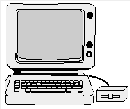
 The Altos computer came into Deborah's life in 1983. It
was a multi-user desktop machine initially with 5MB of hard drive
space, upgraded to a phenomenal 15MB. All of the administrative
record-keeping programs of the ELI (Wordstar 1.0, dBase II, and
SuperCalc) ran in less than 64K of memory.
The Altos computer came into Deborah's life in 1983. It
was a multi-user desktop machine initially with 5MB of hard drive
space, upgraded to a phenomenal 15MB. All of the administrative
record-keeping programs of the ELI (Wordstar 1.0, dBase II, and
SuperCalc) ran in less than 64K of memory.
 The ELI made its first foray into computing by allowing
Deborah to purchase whatever she could get for $2000. This turned out
to be a mini-lab of six Commodore Vic 20's with black and white TV
monitors, dear little machines that had to be stored in the locked
bathroom between classes. Deborah taught "Introduction to Programming
in BASIC" as her first CALL course. She did various presentations
extolling the virtues of teaching programming languages as a sneaky
way of introducing Western logical thought and rhetorical
patterns.
The ELI made its first foray into computing by allowing
Deborah to purchase whatever she could get for $2000. This turned out
to be a mini-lab of six Commodore Vic 20's with black and white TV
monitors, dear little machines that had to be stored in the locked
bathroom between classes. Deborah taught "Introduction to Programming
in BASIC" as her first CALL course. She did various presentations
extolling the virtues of teaching programming languages as a sneaky
way of introducing Western logical thought and rhetorical
patterns.
The Kaypro and Apple II Years/Springfield
 >Having "Alt" around the office and the desire to write
administrative applications at home encouraged Deborah to invest in
her own computer, a Kaypro. It was a "portable" 26 pounds and served
her well. Deborah moved to Springfield in 1984, Kaypro in hand.
>Having "Alt" around the office and the desire to write
administrative applications at home encouraged Deborah to invest in
her own computer, a Kaypro. It was a "portable" 26 pounds and served
her well. Deborah moved to Springfield in 1984, Kaypro in hand.

The ELI decided that the computers were popular enough to invest in
better machines. We put together a lab of Apple IIe's with OSU's
School of Education, and were off and running. We continued the
computer class, shifting it to teaching AppleWorks applications, and
added a word-processing option in writing classes.
The Macintosh Years/Sana'a, Yemen
The ELI got a contract to run the Yemen-America Language Institute
in Sana'a, Yemen in 1985. 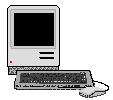 Deborah arrived and got busy setting
up the administrative Macintoshes, chosen because their graphic
interface would be easier for non-native speakers than DOS's
linguistic demands. Unstable power was a major problem, with voltage
swinging from 160V-250V in a matter of seconds (the official voltage
was 220). After burning a couple of computers, five Tripp-Lite
UPS/surge protectors, and much other equipment, YALI set up its home
remedy of running the computers off truck batteries hooked to
inverters. This solution and a Sola surge protector did the
trick.
Deborah arrived and got busy setting
up the administrative Macintoshes, chosen because their graphic
interface would be easier for non-native speakers than DOS's
linguistic demands. Unstable power was a major problem, with voltage
swinging from 160V-250V in a matter of seconds (the official voltage
was 220). After burning a couple of computers, five Tripp-Lite
UPS/surge protectors, and much other equipment, YALI set up its home
remedy of running the computers off truck batteries hooked to
inverters. This solution and a Sola surge protector did the
trick.
The instructional lab consisted of Apple IIe's with Grammar Mastery, AppleWorks, and several shareware simulations and other programs. Students were convinced that computers were the way of the future and pressed constantly for programming classes. They were willing to settle for word-processing, however. The Apples, along with their Sola surge protector, did a stellar job of surviving the local power problems. They were still alive and well when the ELI decided not to reapply for the YALI contract in 1990. They may be there still...
Deborah's Kaypro also survived the local power problems and was left in Yemen as a legacy, along with her TRS-80.
The Macintosh SE Years/Springfield
Deborah returned from Yemen in 1988 to find the Altos being replaced by Macintoshes in the front office, and FoxBase+/Mac, Word, and Excel replacing dBase II, WordStar, and SuperCalc. It was time for major rewrites of administrative record-keeping software. The Apple IIe's also gave way to Macintosh Pluses and enriched possibilities in our new Learning Center. Computer-enhanced courses expanded to include intermediate grammar, most of which was taught with Gapmaster, Matchmaster, and Storyboard in order to offer paragraph-level work.
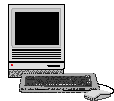 Springfield was much the same. Deborah bought a Macintosh
SE and took on associate editorship of CALL Digest, the
predecessor of CAELL
Journal from ISTE,
and began co-editing TESOL's then-annual Software List. She took a
year of leave in 1989/90 to work full-time on doctoral coursework in
computers in education. Back at the ELI and the Editor of CAELL
Journal, Deborah became increasingly enmeshed in computer
work--especially as Chair of TESOL's CALL Interest Section in
1991.
Springfield was much the same. Deborah bought a Macintosh
SE and took on associate editorship of CALL Digest, the
predecessor of CAELL
Journal from ISTE,
and began co-editing TESOL's then-annual Software List. She took a
year of leave in 1989/90 to work full-time on doctoral coursework in
computers in education. Back at the ELI and the Editor of CAELL
Journal, Deborah became increasingly enmeshed in computer
work--especially as Chair of TESOL's CALL Interest Section in
1991.
The Macintosh IIsi and IBM-compatible Years/Eugene
 Finishing the Ph.D. was followed by beginning work on Something to Do on Tuesday, a guide to computer-using teachers
that was published by Athelstan in 1995.
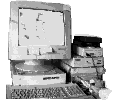
Deborah moved to Eugene, added a Mac IIsi to her Macintosh
collection, and began sharing a house with a diehard DOS person, for
whom the Windows graphical interface was wimpy. Deborah renewed her
acquaintanceship with MS-DOS and learned about Windows, over the
years growing familiar but not patient with the interface.
Finishing the Ph.D. was followed by beginning work on Something to Do on Tuesday, a guide to computer-using teachers
that was published by Athelstan in 1995.
Deborah moved to Eugene, added a Mac IIsi to her Macintosh
collection, and began sharing a house with a diehard DOS person, for
whom the Windows graphical interface was wimpy. Deborah renewed her
acquaintanceship with MS-DOS and learned about Windows, over the
years growing familiar but not patient with the interface.
The PowerPC Years/Eugene
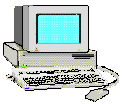 Deborah finally got stopped using the Mac IIsi at home and
replaced it with
a PowerCenter 180, testing the clone market (which was still
alive when she bought the PowerPC). She became the Technology
Coordinator of the ELI, trading the people-intense demands of
the Coordinator of Instructor position for one that allowed for more
time for communing in cyberspace. She helped put together the
TESOL/CELIA CD-ROM and the Macintosh portion of CELIA,
the CALL software archive that formed the backbone of the CD. She
worked on TESOL '98's Technology Connects Interest Section sessions. Her
projects included the annually-updated CALL-IS Software List.
Deborah finally got stopped using the Mac IIsi at home and
replaced it with
a PowerCenter 180, testing the clone market (which was still
alive when she bought the PowerPC). She became the Technology
Coordinator of the ELI, trading the people-intense demands of
the Coordinator of Instructor position for one that allowed for more
time for communing in cyberspace. She helped put together the
TESOL/CELIA CD-ROM and the Macintosh portion of CELIA,
the CALL software archive that formed the backbone of the CD. She
worked on TESOL '98's Technology Connects Interest Section sessions. Her
projects included the annually-updated CALL-IS Software List.
She ran two series of workshops on CALL in Brazil. The high points were meeting a lot of wonderful people, eating great food, and being interviewed on Brazilian TV--about the US-Brazil soccer match in the Americas Cup. Fortunately, she is an avid soccer fan and didn't sound too foolish on TV. Other activities included two Salzburg Seminars in Austria, one on using the Internet for language teaching and the other on Resources for American Culture studies (see a picture of the castle she slept in) and a couple of Online Seminars for EFL teachers in Eastern Europe. She became convinced that it's just as much work to organize an online seminar as one where you're physically present after sending out some 150+ email messages over the course of three weeks.
The Dual Platform Years/Eugene
The harsh reality of consulting in a Windows world convinced Deborah to upgrade from a borrowed 486 and invest in a Dell Pentium - a Dimension XPS with built-in Zip drive, a 40X CD-ROM, and a 9GB hard drive. She had made the decision to run both Windows 95 and Windows NT (using System Commander's dual boot option) on the 486 for better software testing. Unfortunately, it meant a whole lot more work than anticipated. As a result, the new Dell gave up on dual booting and shifted to Windows 98, then finally to Windows XP.
 Lack of space in the home office became an issue with two complete
computers, so Deborah decided to work with a switchbox that would allow
her to have two CPUs on one monitor, keyboard, and mouse. It works,
though having 15 cables rather than 6 is a mess. She has upgraded from her previous laptop (a ThinkPad 390X bought on eBay) to a Lenovo Tablet PC that is both nifty and considerably lighter to carry in a backpack (with
significant improvements in shoulder and back health, too). Someday she
may get a cool IBook...
Lack of space in the home office became an issue with two complete
computers, so Deborah decided to work with a switchbox that would allow
her to have two CPUs on one monitor, keyboard, and mouse. It works,
though having 15 cables rather than 6 is a mess. She has upgraded from her previous laptop (a ThinkPad 390X bought on eBay) to a Lenovo Tablet PC that is both nifty and considerably lighter to carry in a backpack (with
significant improvements in shoulder and back health, too). Someday she
may get a cool IBook...
With cutbacks in enrollment and revenue at the ELI as a result of the Asian economic crisis, Deborah became the ELI Director in 1999. She was more involved than ever with budgeting, personnel, and recruiting, as well as teaching. She was part of the ELI's teacher preparation projects, a series of workshops and activities for elementary and middle school teachers who work with ESL children. On the technology side, she worked on the ELI's Technology Seminars, a series of workshops in July, and continued to indulge her penchant for travel while doing ELI work with the Traveling Tech Seminars. Activities were in Mexico, Qatar and Oman, France, Turkey - Sabanci University and Koc University, Tunisia, Egypt, Thailand, Cyprus, and Taiwan. She continued with the CALL Interest Section Software List, and maintained an online version. Her Tech Tip of the Month became more of an archive than a monthly addition to the website due to administrative demands.
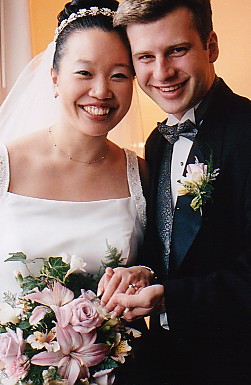
A highlight was her son Jesse's marriage to Amy Ma in 2002. (See a photo.) They have a house in Portland, where Jesse works with Winterbrook Planning and Amy, with YGH Architects. It's close enough to encourage frequent trips up and down the Willamette valley. The newest addition to the family is Jesse and Amy's golden lab, also known as my "grandpuppy." (See Atlas's request for this addition to the website.) Here are a few pictures of my favorite dog, too.
Back to the Mac - and More
2008 was a memorable year in many respects. Deborah wrote one more major grant for the ELI: a World Bank project with four universities in Yemen. She and another old YALI hand, Rick Finnan, were joined by several other ELI and OSU faculty for workshops in Yemen. It was a wonderful thing to be back in Sana'a and Taiz after 20 years, and to finally see Aden.
The ELI achieved accreditation by the Commission on English Language Program Accreditation (CEA). A two-year period of work came to a successful conclusion. Yeoman effort by Donna Shaw, Barbara Dowling, and everyone at the ELI resulted in full accreditation with no reservations.
After nine years as Director, Deborah induced one of her colleagues to take on the job. She will be forever grateful to Jane for being willing to step in. With her return to teaching, Deborah acquired an iMac in her office with Parallels. She was not quite willing to give up on Microsoft Outlook's nice calendar function, especially on a Microsoft Exchange campus. 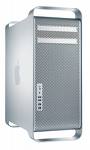
In a parallel move, Deborah purchased the largest computer she had ever had, both in terms of size and power - a PowerMac 64-bit dual-core Xeon processor machine. The hope was to have only one machine and run both Windows and Mac software on it, using Boot Camp or an emulator. She started with Boot Camp, but was not happy without the ability to copy and paste between platforms. The new version of Parallels worked well, with some initial glitches.
Changes were afoot at the ELI, as well. Upper administrators were looking for a way to attract full-paying international students, i.e., undergraduates, while not funding internal recruiting. They decided to hire a British firm, INTO University Partnerships, to recruit students - and to take over the ELI in order to pay for it. The "joint venture" is still evolving, but it's clear that it's not a cheap fix. Deborah had to change the tag line on her email from "The ELI: Curing monolingualism for 43 years." Given INTO's very limited track record, it seemed that no tag line would be appropriate. The ELI's accrediation also became questionable with the takeover, much to the dismay of all of those at the ELI.
The bright side
The best part of 2008 was the birth of the most beautiful baby in the world, Jasmine Aurora Winterowd, on July 27. She emerged as a surprisingly large 9 pounds 12 ounces (ouch!). Deborah took the summer off for the first time in at least 20 years, maybe longer, and spent as much time as possible with her new granddaughter in Portland (fortunately only 2 hours by car or train from Eugene). And with Jasmine's parents, of course. A photo of Jasmine adorned Deborah's bulletin board and served as a reminder that life could indeed be very good, no matter what was going on at work. Jasmine's mother Amy sends photos and uploads Jasmine videos on YouTube, providing much-appreciated Jasmine moments during the times that Deborah was not in Portland. (Talk about a digital native, online virtually from birth!) Every week is a new experience and a reminder that being a grandmother is a fabulous thing.It's sooo much better than being a parent!
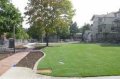 The reconfigured West University Park opened in December, after having been closed for over 10 years. The first step was a land swap that changed the orientation of the park to one that was more visible. Then came two years of work by the neighborhood association, West University Neighbors; a Neighborhood Matching Grant that Deborah managed from the City of Eugene; and a lot of volunteer time and effort. One day there may be benches and even a coffee cart in the park, but at least it's open.
The other major change of 2008 was a shift in jobs. Deborah finally decided that a five-minute bike ride to work was in order, and applied for a position at the American English Institute at the University of Oregon in Eugene. Deborah had many friends at the AEI already, so she was delighted to see a full-time career track position open. She was hired by the AEI and started Winter 2009 (mid-December 2008, in the obscure calendar of the Oregon University System). It is a wonderful thing to be able to go home during the day and then return to work - not a possibility with an hour's commute each way to Corvallis. Deborah is also finally benefitting from living in the student ghetto. She is enjoying new work, new enthusiasm, and an emphasis on quality. The photo of Jasmine is still a reminder of what life is really about.
Additional brightness was added in June, 2014 with grandson Jack (John Konzelmann), and then in May, 2016 with second grandson Ryan, and finally in March, 2018 with grandson Evan. Sadly, they are on the East Coast, so not nearly as convenient to see. Then again, there's Facebook and FaceTime!
A professional highlight in 2014 was being elected to TESOL International Association's Board of Directors for a 3-year term. Being elected meant that I now refer to it by the full name and learned a bunch of new acronyms. It was also an opportunity to see the association from yet another perspective and get to know the wonderful TESOL staff. For so few people, they accomplish a great deal of work.
Moving to Portland
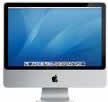
The joys of grandparenting being so lovely and a house coming available down the street from Jasmine and her parents, Deborah bought a house in Portland and moved there in 2015. While she could still teach online, she kept working at the University of Oregon, though part-time as a retired person. She took her larger screen iMac with her and got a standing desk, a healthy treat for someone who spends way too much time online.
 The new house required a certain amount of effort, starting with pulling out all of the wall-to-wall carpet in every room. Then came electrical upgrades, a refreshed kitchen, and insulation in the roof and walls. Sixteen solar panels mean that she does not pay for electricity. An electic heat pump means that even though there is a natural gas furnace, the costs are surprisingly low.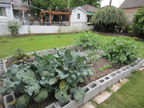
She also dug up the front planting strip and created a back garden at the new house, which are both coming along quite well. (Thanks to Bill Walker for advice!)
As of 2017, Deborah was pretty much retired from the University of Oregon. It was a slow ebbing away, but timely with staff cutbacks looming. She still delights in teacher training, doing workshops around the world for the US Department of State and independently. In 2018 she was elected to the TESOL Board as TESOL President-elect, becoming President in 2019-2020. It was an interesting, rather hairy experience. Issues within TESOL related to diversity, equity, and inclusion came to the fore at the Atlanta convention in 2019; Deborah's plans for her focus as President changed as a result. the Diverse Voices Task Force was set up to do research and make recommendations. Then the pandemic caused the Board to cancel the in-person convention in 2020. The shift to a virtual conference was successful in a number of ways, bringing people to the convention who had never been able to attend before. It set TESOL up for hybrid conventions in 2021 - and into the future.
By mid-2021 Deborah's Board responsibilities were finished. It was time to shift gears, but any thoughts of travel were put on hold. All consulting became virtual - and there were a lot of virtual presentations. If a conference organizer doesn't have to pay transportation and lodging for keynotes and plenary speakers, the possibilities abound. The home setup now includes a Yeti Blue microphone, UBeesize circle light, and a folding screen (that last borrowed from my son and daughter-in-law). My virtual workshops have taken place in Puerto Rico, Egypt, Nepal, Costa Rica, the United States, Saudi Arabia, Italy, China, Mexico, Republic of Georgia, Korea, Africa, and Canada - in two years so far. More to come - Pakistan, Korea, Saudi Arabia, and Indonesia are on tap, if all goes well. So much for retirement.
The next adventures are still to come!
Enough, already...
For more information (as if this wasn't enough!), you can email me - dhealey at uoregon dot edu.